
Why Luxor
History, horizon, and the heart of totality.
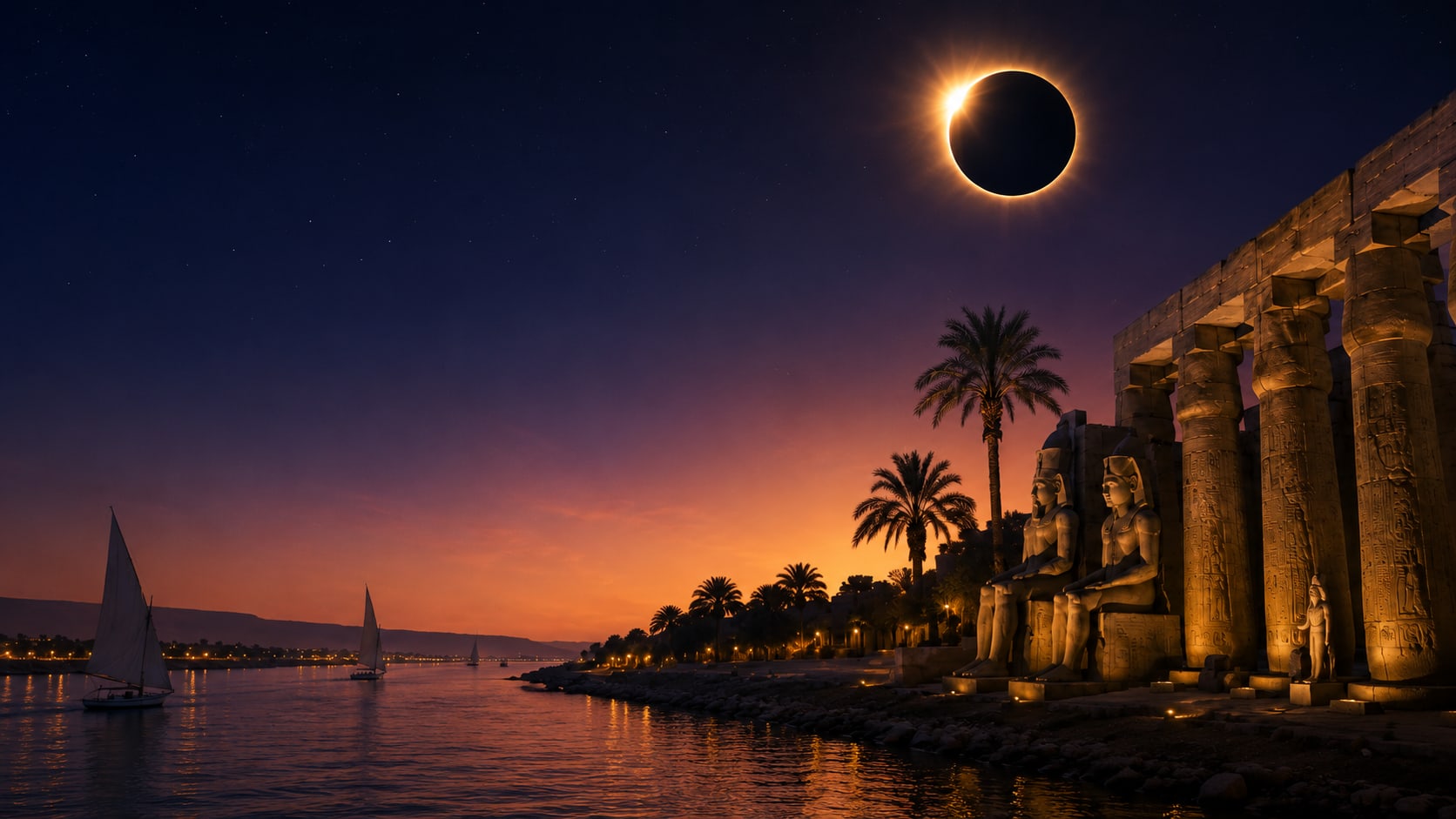
Luxor is more than a front-row seat to a celestial event. It is a place where temples, desert light and the Nile turn six minutes of totality into a full journey. August here is hot and almost cloudless, which is exactly why the sky will be clear when it matters. You are not just chasing an eclipse — you are arriving somewhere that has been watching the sun for thousands of years.
Eclipse at a glance
- Sun above horizon
- 82°
- Next one this long
- 2114
- August rainfall
- 0.1 mm
All times local to Luxor (UTC+3) on Monday 2 August 2027. Worth checking again closer to the date. · Wikipedia · Sky & Telescope · National Solar Observatory · timeanddate
Your eyes · read this before you book anything
For all but those six minutes, looking at the sun will damage your eyes — and it will not hurt while it happens, which is exactly what makes it dangerous.
- Retinal damage is painless — there are no nerve endings in the retina, so nothing warns you it is happening.
- Use eclipse glasses that say ISO 12312-2 on them. Sunglasses do not work. Not dark ones, not several pairs stacked up, not a phone screen.
- Keep them on for the whole partial phase — from 11:40 until totality starts at 13:02, and again from 13:09 until 14:27.
- Only during totality itself, those 6 minutes 22 seconds, is it safe to look with bare eyes. The second the sun starts to reappear, glasses back on.
- Cameras, phones, binoculars and telescopes need their own solar filter over the front of the lens. Eclipse glasses held behind an eyepiece will burn straight through.
- Buy from a reputable seller and check every pair for scratches or pinholes before you fly.
Where to start.
The other seven days.
The 8-day Luxor eclipse trip.
Eight days, seven nights — and you land three days before the eclipse, not the night before. One delayed connection should never cost you a six-minute event that does not come back for 87 years. Those spare days also let everyone find the rhythm, which here means being out early, resting through the middle of the day, and going again in the evening. A day in August holds about two-thirds of what a day in March holds, so a five-day trip really gives you three. Eight is the honest number.
- Day 1Land in LuxorInto LXR, usually via Cairo. Settle in, eat late, sleep. Nothing is scheduled today, on purpose.
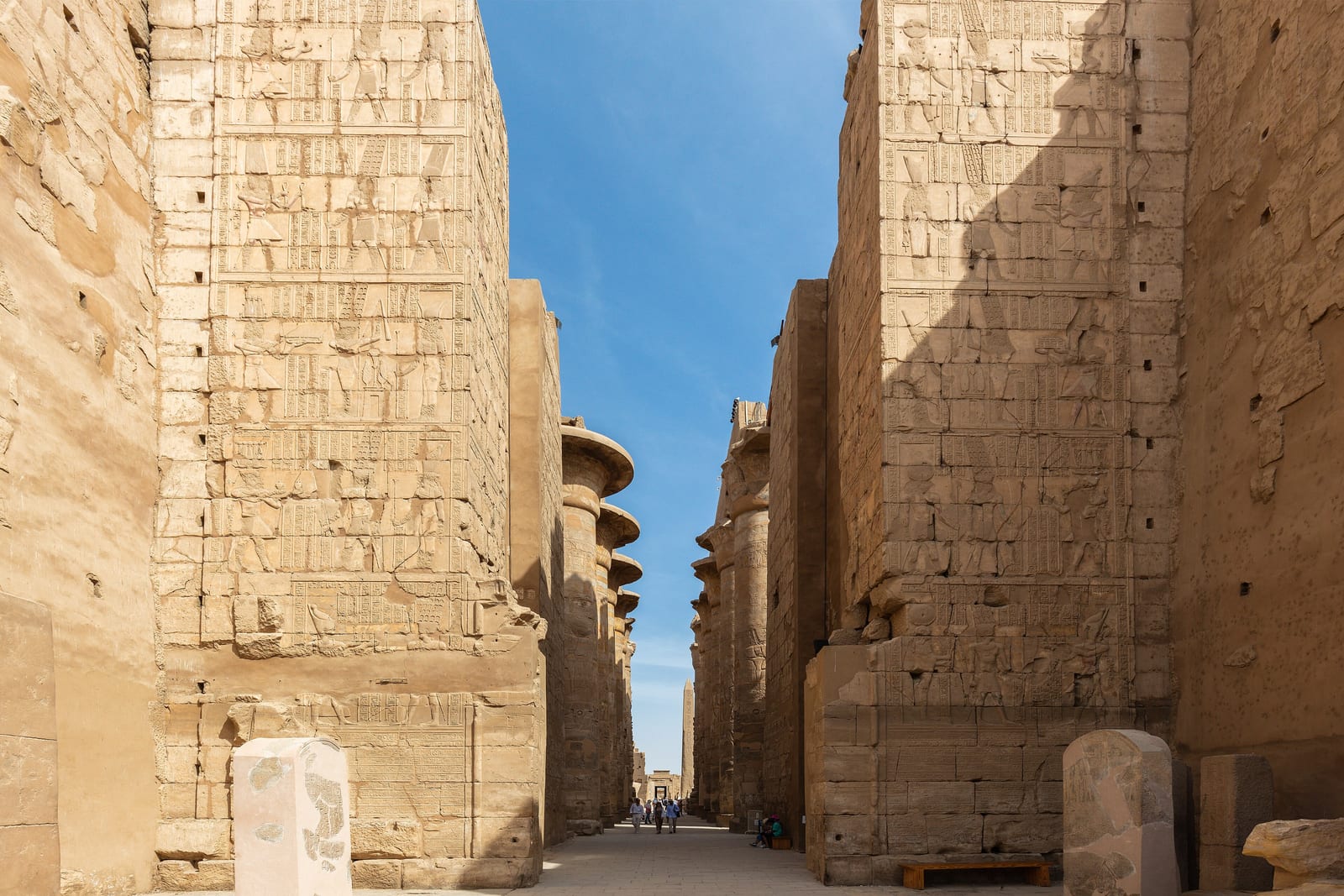
- Day 2Karnak, then the riverKarnak is the temple of Amun-Ra — a sun god — and its main axis lines up with the winter-solstice sunrise. Go early. Come back to the Nile for the evening.
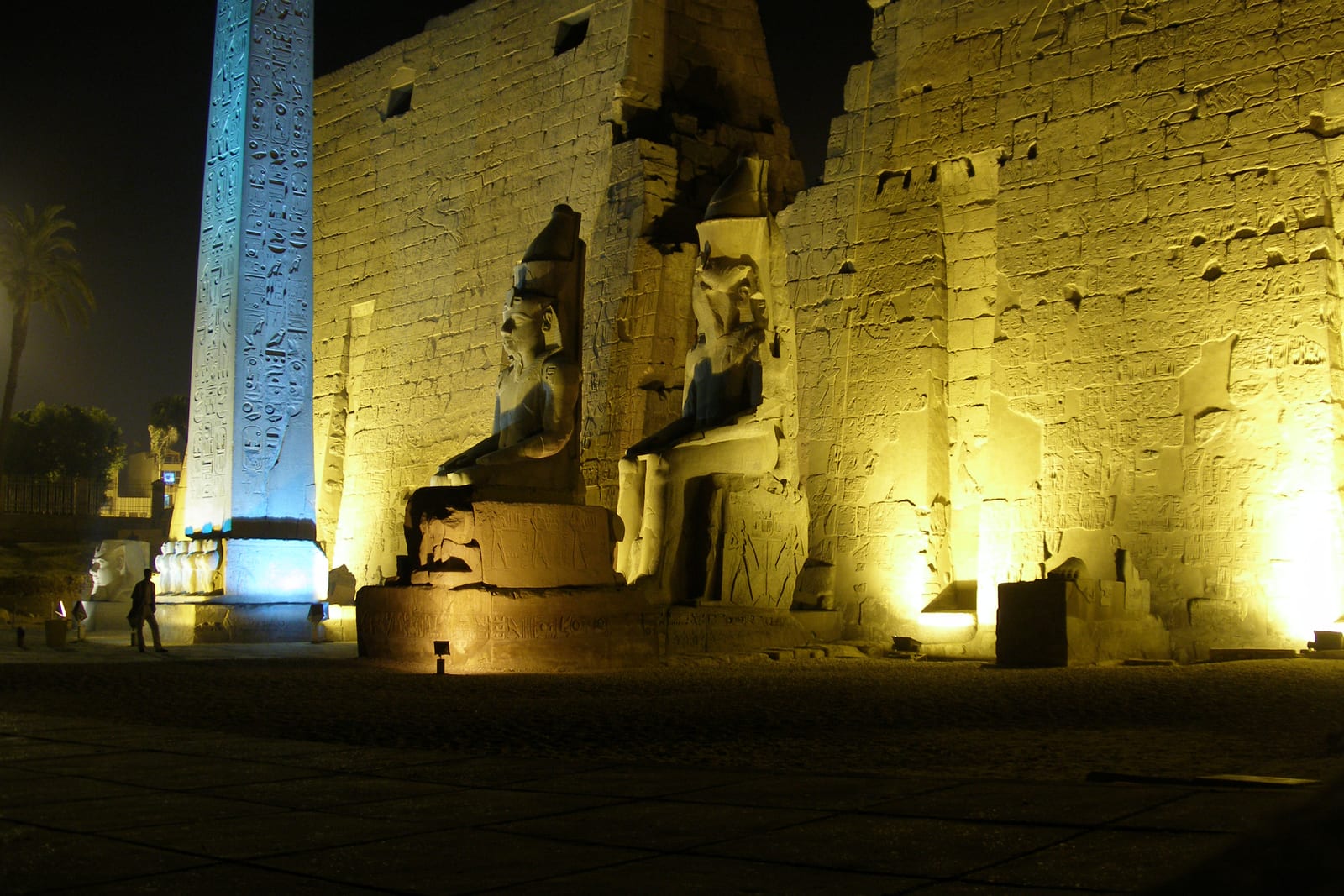
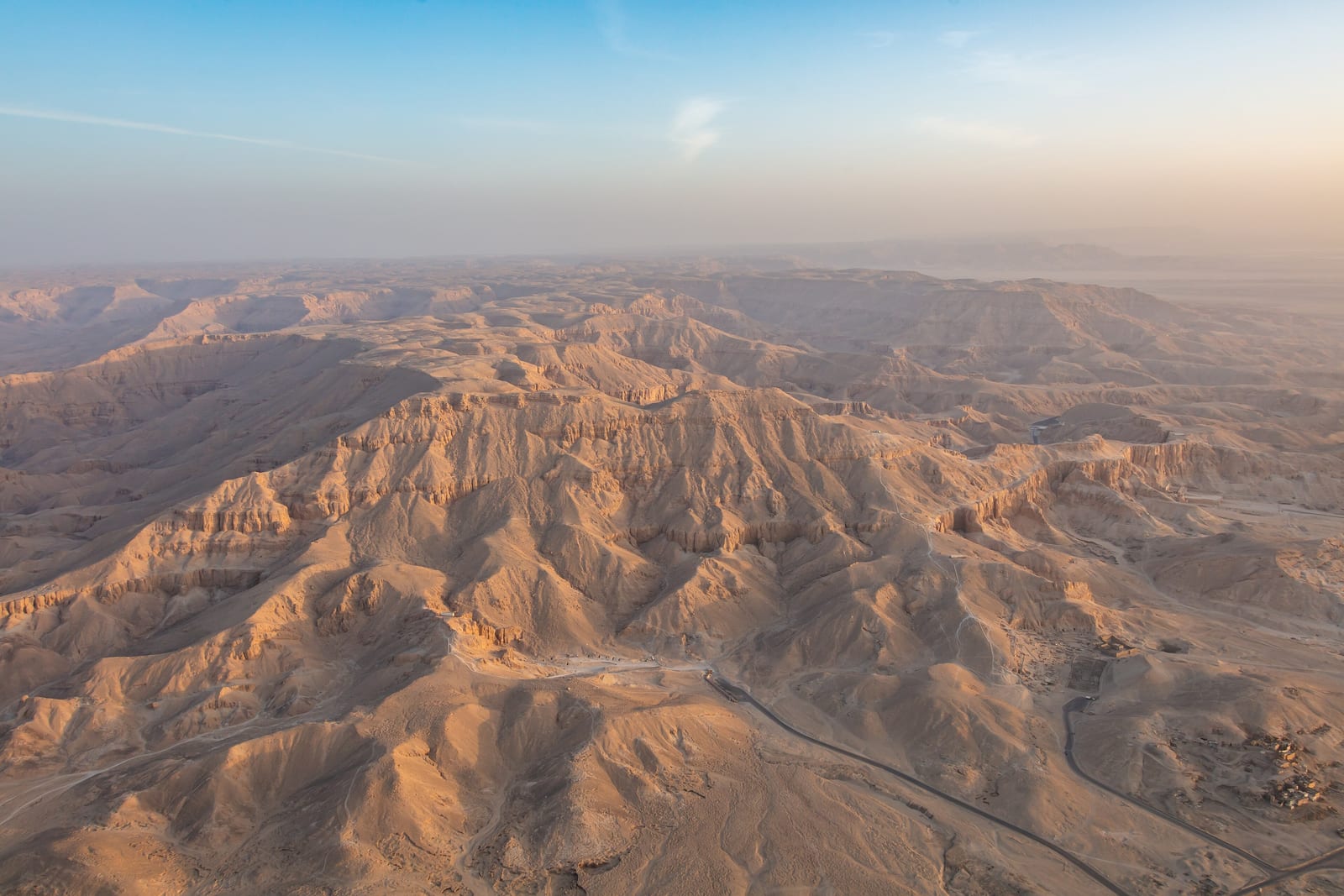
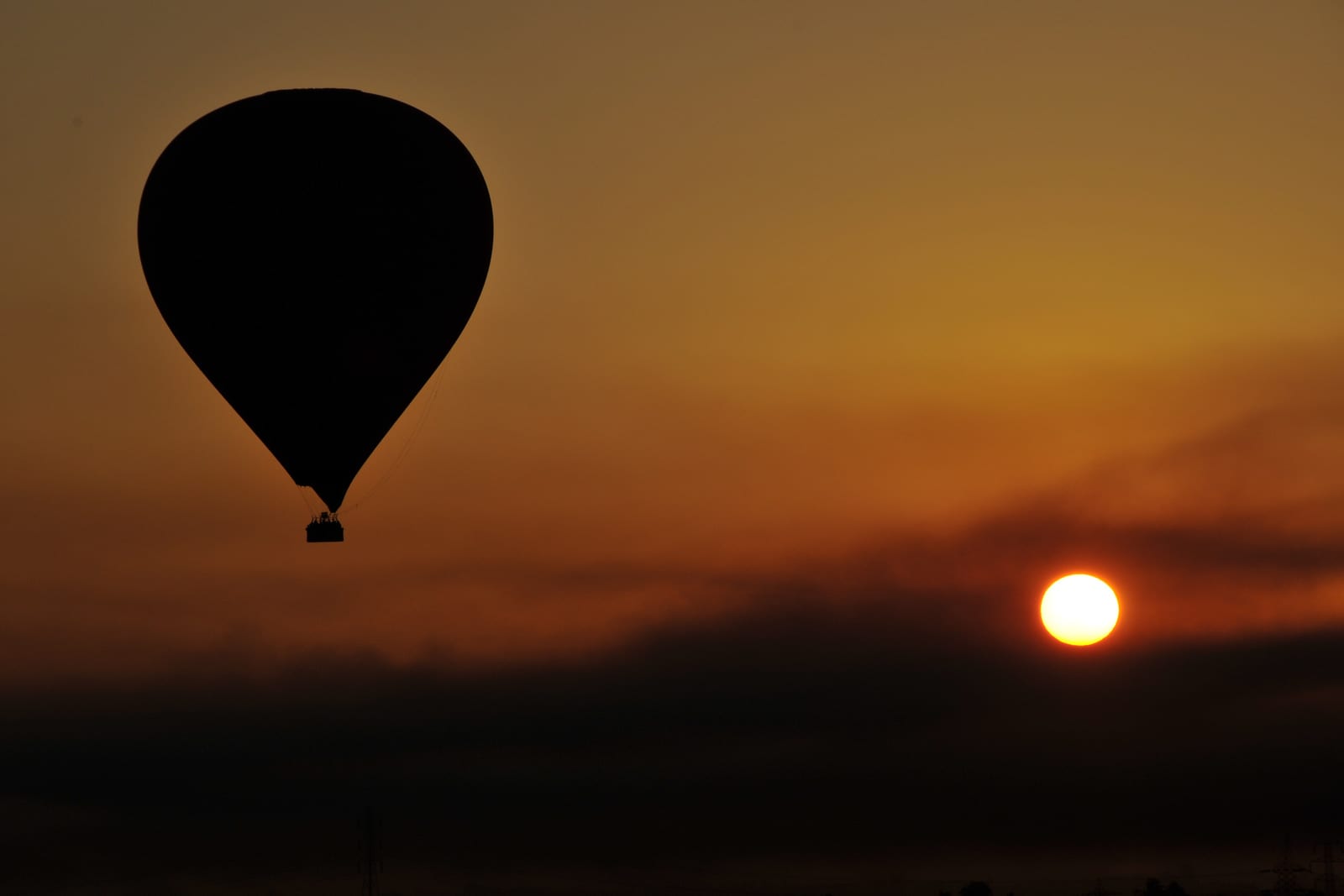
- Day 3Balloon at dawn, Luxor Temple after darkUp before sunrise for the balloon over the West Bank. Rest in the middle of the day. Luxor Temple is lit at night and that is the hour to see it.
- Day 4Eclipse dayThe one day that breaks the dawn-and-dusk rule — you are outside and stationary from late morning until about 15:00, in the hottest hours of the hottest month. Plan for it: shade you control, three litres of water each, and in position by mid-morning because the traffic will be nothing like a normal day. Then six minutes and twenty-two seconds you will be telling people about for the rest of your life.
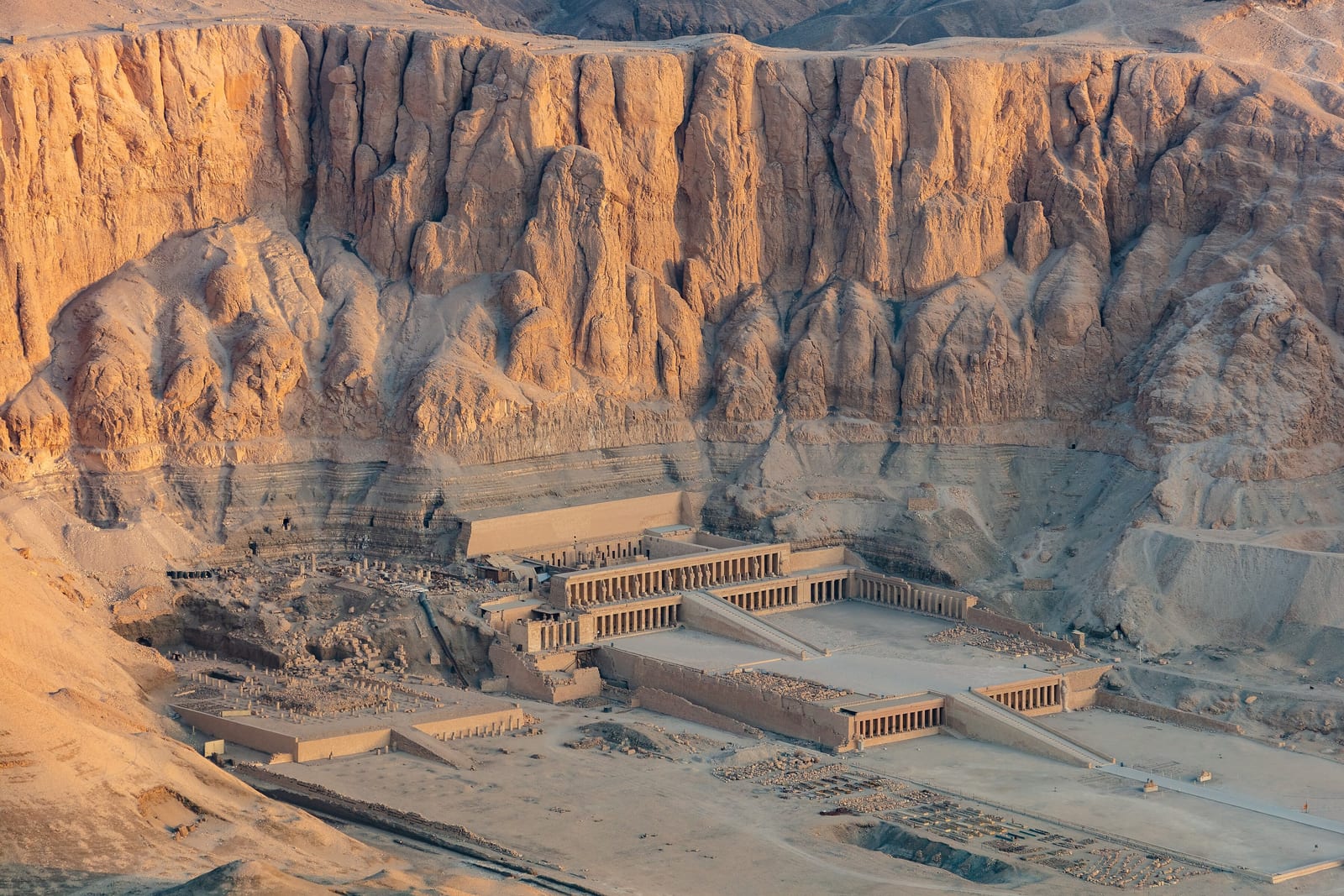
- Day 5Valley of the Kings and HatshepsutBoth at dawn. Everyone is still buzzing from yesterday, so keep it to the morning and leave the afternoon loose.
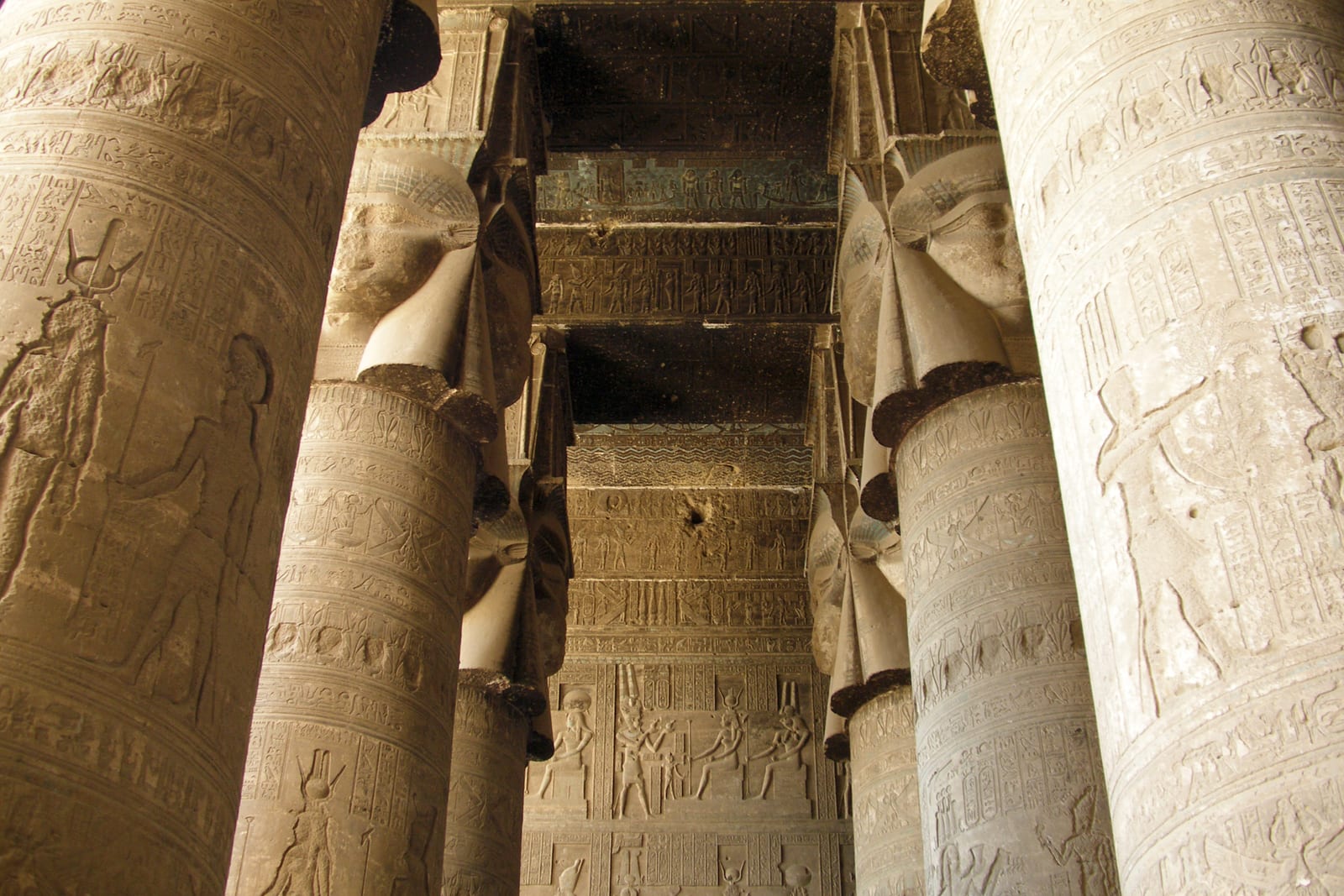
- Day 6DenderaAn hour north, and the best beat of the trip. Skip the hunt for the famous zodiac — the original was cut out in 1821 and is in the Louvre. The ceilings that are still here are better anyway: a painted sky vault, and the goddess Nut swallowing the sun each night to give birth to it at dawn. Read that the day after standing in the moon's shadow.
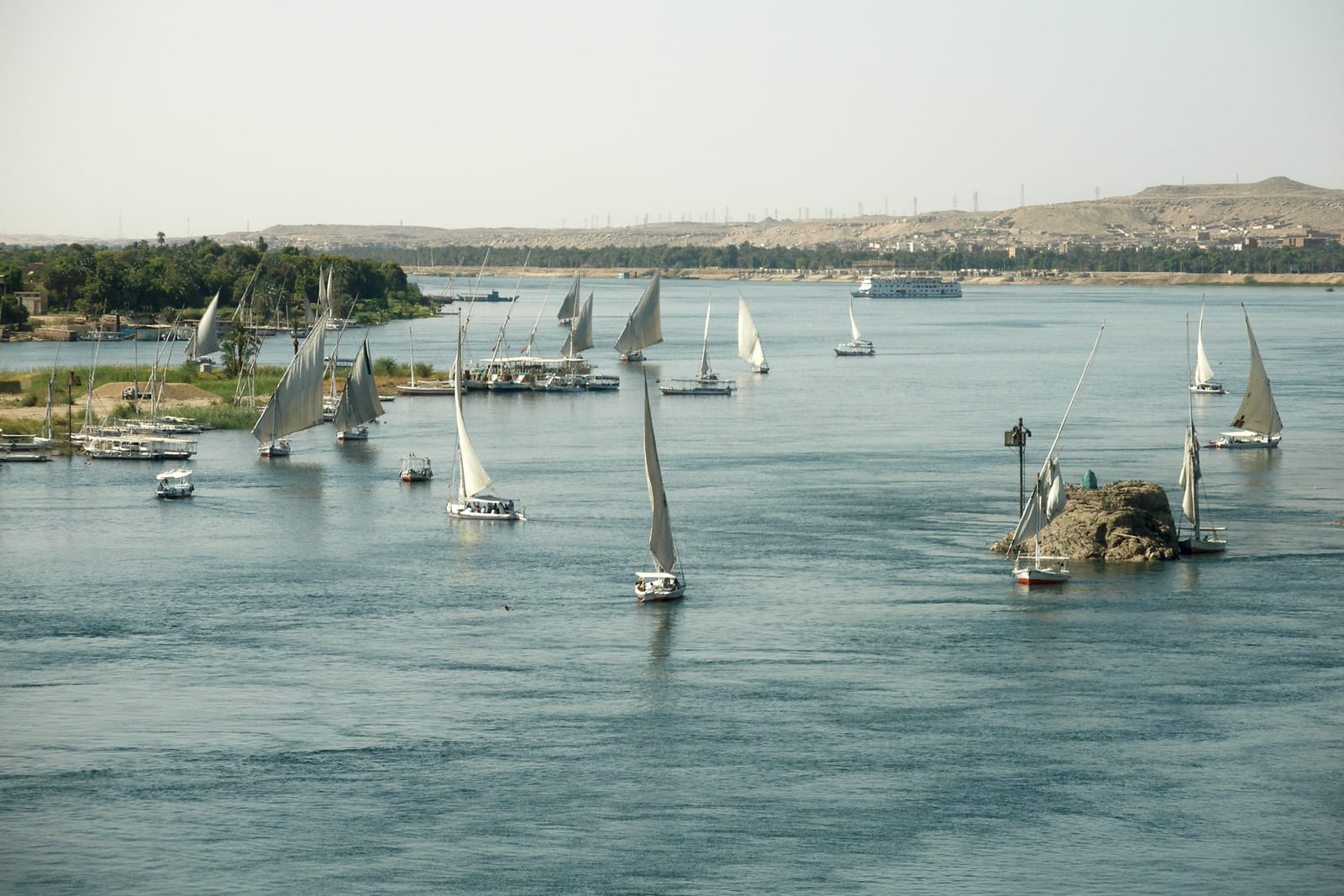
- Day 7Down the NileSail toward Esna, Edfu and Kom Ombo, or make the long run to Abu Simbel. A slow day either way, which by now you will want.
- Day 8Home, or keep goingOut of LXR — or carry on to Aswan or Cairo if people have the days.
Going as a group? Read this bit
The balloon is priced per basket, not per person — Baskets take anywhere from 8 to 24 people. If your crew wants to be up there together rather than split across two envelopes with strangers, you book the basket as one booking — so decide who is actually coming before you book, not after.
A felucca is chartered per boat — One boat takes roughly 8 to 10. Six of you costs the same as ten of you, so this is the rare thing that gets CHEAPER per head as the group grows. A dahabiya is the same logic with cabins — around 8 to 12, so a big group can take the whole boat.
Dendera is priced per van — It is an hour each way and the vehicle is the cost. A van seats 7 to 14, so the run splits well across a crew and badly across a couple.
A private Egyptologist is per group, per day — Not per person. Twelve people pay the same for the guide as three do. Going as a group is what makes a private guide affordable rather than a splurge.
Eclipse day is one spot, one vehicle, one plan — You cannot meet up on the day — the traffic will not allow it. One viewing spot, shade you control, three litres of water each, everyone in the same vehicle, in position by mid-morning.
Hotels price on double occupancy — That is the industry default, and it is why group trips get awkward: couples are fine, the solo travellers get charged a single supplement, and somebody always ends up quietly subsidising somebody else. Sort the rooms first and split them honestly — that part is what WeGoing is actually for.
Got more or less time?
5 days · the eclipse core — Land two days ahead, eclipse day, one day after. It works if you only have a week of leave, but you will skip the Nile and Dendera.
11 days · Egypt and the eclipse — Cairo and Giza bookended onto the Luxor week. More to organise and more to split — and the shape most groups actually end up booking.
Start below and we'll drop this whole Luxor shape into your trip — you just move things around.
Who built this itinerary.
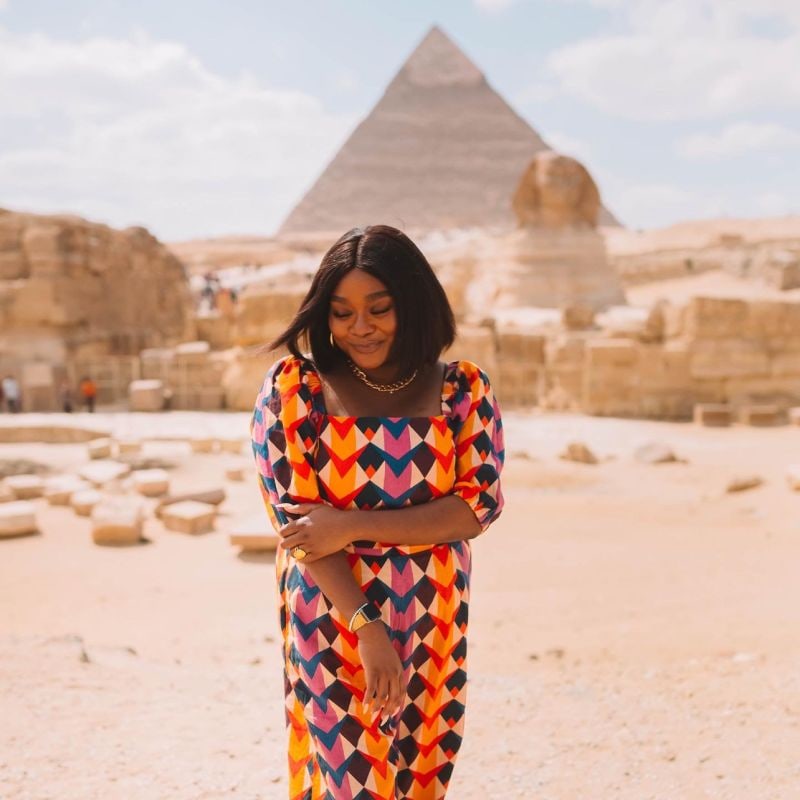
“Travel is storytelling brought to life.”
Fawziah is an Egyptian Nubian-American educator who founded The Curated Passport in 2023 and works in Egypt exclusively. She builds trips around the country's communities rather than its monument checklist, and hires local experts, artisans and guides so the money stays where the trip happens. She has been running group departures in Egypt for years, which is the part of this trip that is genuinely hard.
Trips you can take, or take pieces of
Sand & Sea · 10-Day Experience10 days · EgyptOpen →Take the whole trip, or pick the days you want and build your own around them.
- Group departures — Curated group trips in Egypt, typically around nine days, with 5-star stays on double occupancy, domestic transport, entries, some meals and guides included.
- Curated travel — A private version of the same thing, shaped to your crew's pace and interests — useful if your group wants the eclipse week built around something specific.
- Day excursions — Shorter guided days in Cairo and Alexandria, handy if you bookend the Luxor week with the Giza end of the country.
Start planning
Plan your Luxor trip.
A few quick taps and we'll pre-fill your WeGoing! planner — all optional.
— When you'd visit
The best months are pre-picked — tap to change.
— What's the occasion
— Where you'd fly into
— How many people in your crew
Opens the planner with Luxor · 1 month ready.
Questions people ask.
How long is totality in Luxor on 2 August 2027?+
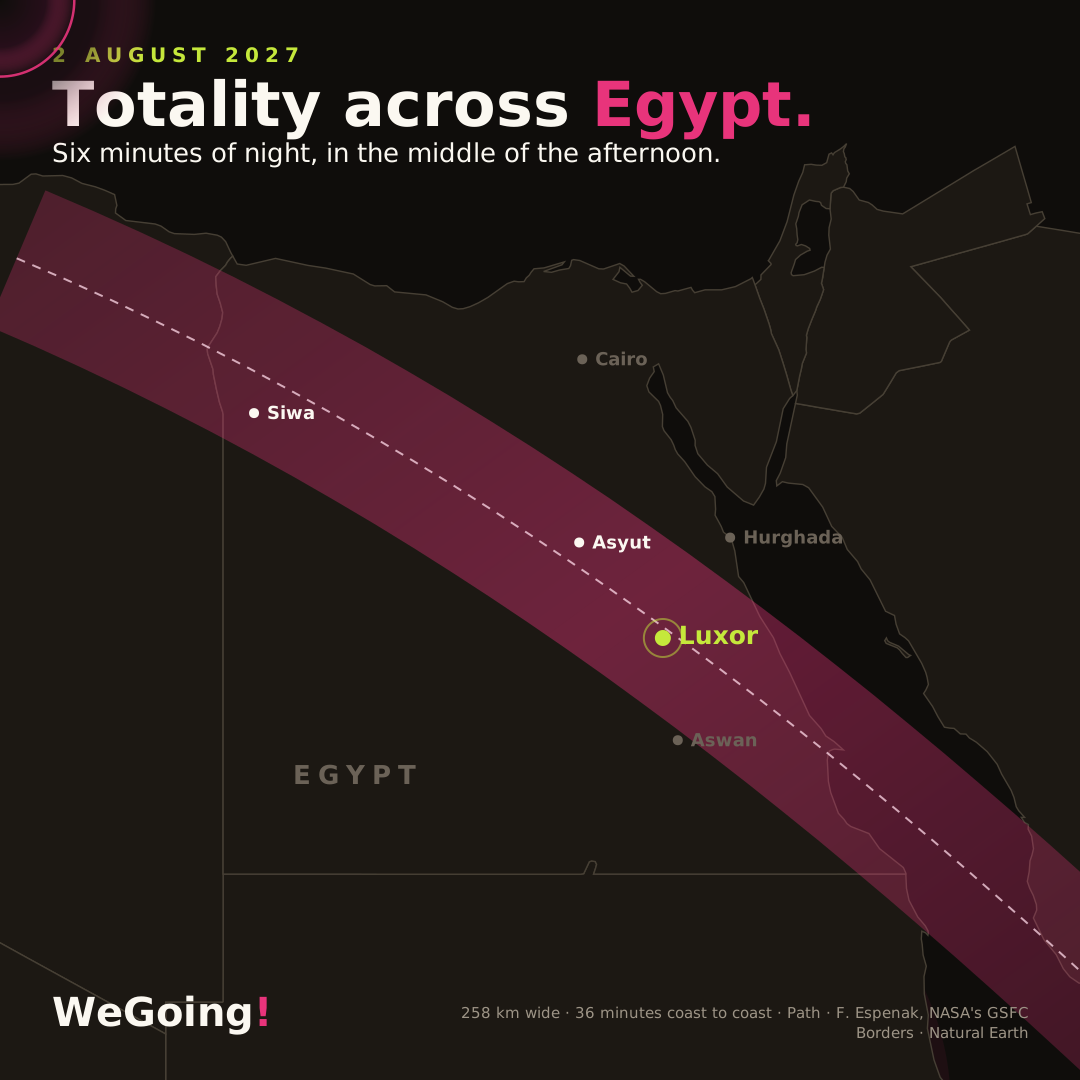
6 minutes and 22 seconds. Luxor sits about 16 km from the centre line of the path — near enough on it — so it gets essentially the maximum. The longest point anywhere on the path is 6 minutes 23 seconds, barely half a second more, and it falls further up the path to the north-west. It is the longest total solar eclipse on easily reachable land this century, and nothing longer happens anywhere until 2114.
What time does the 2027 eclipse start in Luxor?+
Local time in Luxor: the partial eclipse begins at 11:40, totality starts at 13:02, maximum is 13:05, totality ends at 13:09, and the partial phase finishes at 14:27. The sun is about 82° above the horizon at maximum — near enough straight overhead.
How many days should we spend in Luxor for the eclipse?+
Eight days, seven nights, arriving three days before. Two clear days in hand is the minimum — a single delayed connection should never cost you the eclipse. August also runs on a dawn-and-dusk rhythm, so each day holds about two-thirds of what a cooler month would. Five days will feel like three.
Is Luxor hot in August?+
Yes. August averages a daily high around 41 °C (106 °F), with roughly 367 hours of sunshine in the month and essentially no rain. That is also precisely why it is the right place to watch an eclipse — the sky is about as reliable as anywhere on earth. You plan around it rather than fight it: out at dawn, rest through the middle of the day, out again in the evening. Most groups have the rhythm by day two.
Where else in Egypt is in the path of totality?+
Asyut gets 6 minutes 6 seconds and Siwa Oasis gets 5 minutes 37 seconds. Luxor is the longest of the three and by far the easiest to reach, with an airport and enough beds — which is also why it will fill first. Asyut has very little visitor infrastructure, and Siwa sits near the Libyan border where some governments advise against travel, so check your own country's advice and use a licensed operator if you go.
Is Aswan in the path of the 2027 eclipse?+
No. Aswan gets a deep partial eclipse only — it is well south of the path. This matters more than it sounds, because the classic Nile cruise runs Luxor to Aswan over four nights, so a group that books the obvious cruise can easily find itself in Aswan on 2 August and miss the whole thing. Be in Luxor on eclipse day and sail afterwards. Our 8-day plan does exactly that.
Do we need special glasses?+
Yes, and this is the one thing not to improvise. You need eclipse glasses marked ISO 12312-2. Sunglasses do not work at any darkness. Wear them through the whole partial phase; only during the 6 minutes 22 seconds of totality is it safe to look with bare eyes, and the glasses go straight back on the moment the sun reappears. Cameras, phones and binoculars need their own solar filters.
Does the trip clash with Ramadan?+
No. In 2027 Ramadan falls across February and March, so early August is well clear of it.
When do we need to book?+
Sooner than feels reasonable. For the 2017 eclipse across the United States, lodging on the centre line was gone more than a year ahead — and that was a country with a lot of hotels. Luxor is a small city about to host the longest totality of the century. If your group is going, lock the dates before you lock anything else.
Do we need a visa for Egypt?+
Most visitors do, and Egypt runs an e-visa you apply for online before you travel. Check your own country's requirements and passport validity early — it is the kind of thing one person in every group leaves until the last week.
How big should the group be?+
Six to twelve is the sweet spot for this trip, and the reason is arithmetic rather than vibes. A private Egyptologist, a Dendera van and a felucca charter are all priced per group, so they get cheaper per head as you add people — while hotels price per room on double occupancy, which gets more awkward the more solo travellers you have. Six people can charter a felucca and fill a balloon basket. Past about twelve you start needing two vehicles and the day slows down.
How do six people split a trip like this without one person fronting it?+
That is the part we actually built. Everyone sees the same plan, the same dates and the same numbers, everybody pays their own share, and nobody spends the trip chasing four people for money. Start the trip below and it arrives with these eight days already in it.